
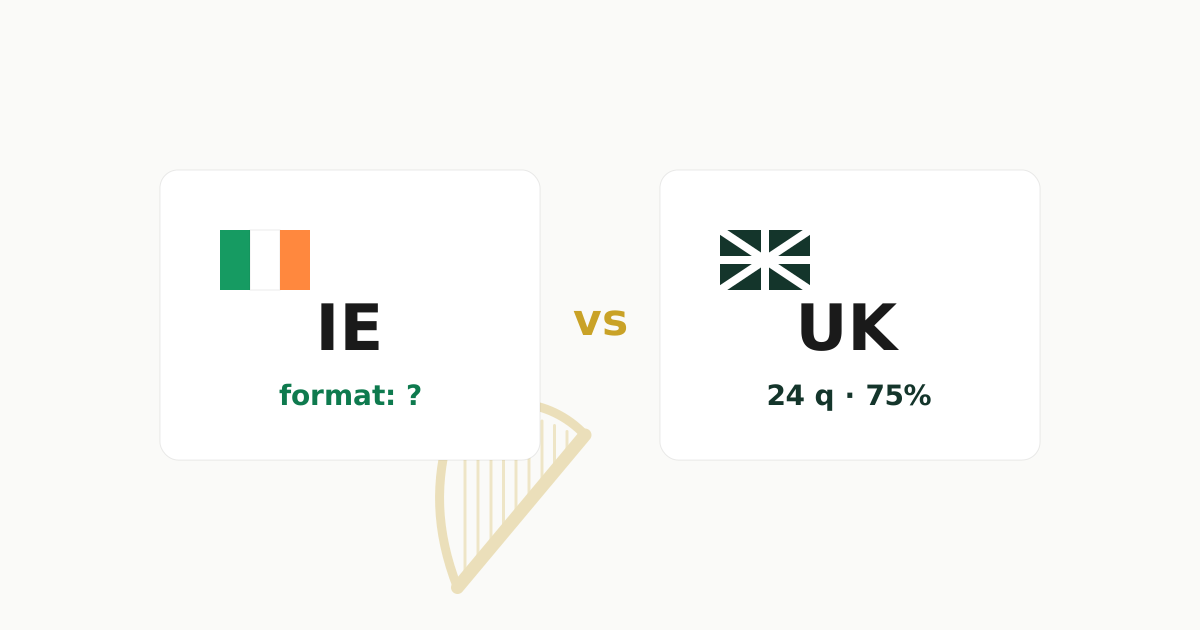
How the UK test works
The Life in the UK Test is 24 multiple-choice questions in 45 minutes, computer-based at an approved test centre, with a pass mark of 18 out of 24 (75%) and a £50 fee. Questions are drawn from a closed pool based on the official handbook, Life in the United Kingdom: A Guide for New Residents — the questions themselves are never published. On top of the test, applicants must separately prove English at CEFR level B1 (or hold a degree taught in English, or be a national of a majority-English-speaking country).
What Ireland has announced, side by side
| United Kingdom | Ireland (planned) | |
|---|---|---|
| Civics test | 24 questions, closed pool, 75% pass | confirmed; format not announced |
| Language | B1 English, proven separately | English, Irish or ISL; level not set; “relatively simple” |
| Residence | 5 years (3 if married to a citizen) | 8 years proposed (5 for spouses) |
| Exemptions | under 18, over 65, long-term conditions | ministerial waiver expected; details TBC |
| Study materials | official handbook, no published questions | none yet |
What two decades of the UK test teach
The Life in the UK Test is one of the most criticised citizenship tests in Europe, and the criticisms are instructive. The handbook is long and heavy on curiosities — dates of battles, names of poets — that critics (including a House of Lords committee) have argued test memorisation rather than the practical knowledge needed to live in Britain. The closed question pool feeds an entire industry of unofficial prep materials of wildly varying quality. And because the language requirement is proven separately, the test itself assumes reading fluency that some otherwise-qualified applicants struggle with.
Ireland starts with a cleaner brief. The announced scope — how society, government and the Constitution operate — is closer to Germany's practical civics model than to Britain's history quiz. And the Minister's “relatively simple” framing for language suggests Ireland wants a lower-friction system than the UK's separate B1 certification.
The big open question: open or closed pool?
Germany publishes all of its questions; pass rates are high and preparation is straightforward. The UK publishes none; the test retains an element of lottery and anxiety. Which model Ireland chooses will matter more to applicants than any other design decision. There's no signal yet — but the stated aim of a test that ensures integration rather than filters people out points, hopefully, toward transparency.
If you've taken (or will take) both
A meaningful number of people hold or will seek both British and Irish naturalisation — especially in Northern Ireland's border communities and among long-term migrants who've lived in both jurisdictions. For them, the practical note is that nothing announced so far suggests Ireland would accept the Life in the UK Test or a UK English certificate as a substitute; assume separate preparation until the bill says otherwise.
Bottom line
Expect something recognisably in the UK's family — a short, standardised civics test plus a language check — but calibrated more gently, with the language element folded in rather than certified separately, and with a waiver for vulnerable applicants built in from day one. We'll update this comparison the moment the general scheme is published.