
What's proposed, exactly
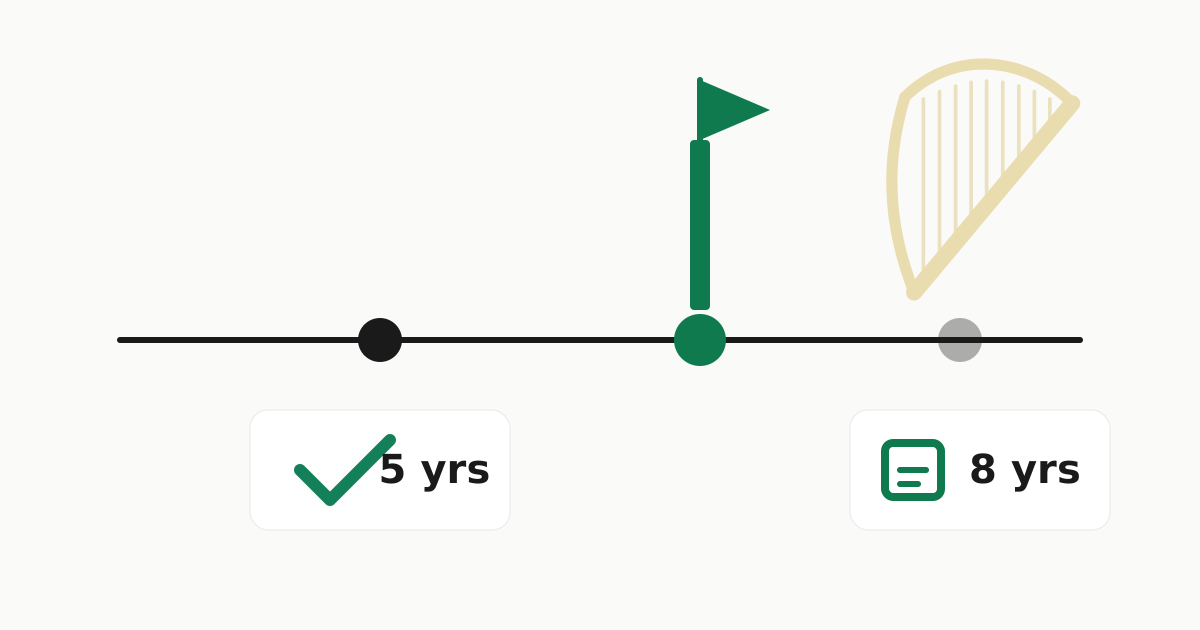
The bill approved for priority drafting in September 2026 would make four big changes for applicants: eight years of reckonable residence instead of five (two continuous years immediately before applying, plus six of the previous ten); a language test in English, Irish or Irish Sign Language; a civics requirement covering Irish society, government and the Constitution; and an economic self-sufficiency condition. Spouses of Irish citizens face their own tightening: five years of marriage instead of three, and five years of residence.
The transitional arrangements have not been published. In past Irish reforms, new requirements have generally applied to applications made after commencement rather than to those already in the queue — but until the bill text appears, nobody can promise that a pending application is safe. What is certain: an application you never filed gets no protection at all.
Are you eligible today?
The current conditions for naturalisation: five years (1,825 days) of reckonable residence in the State during the last nine years, including one continuous year immediately before the date of application; good character; an intention to continue living in Ireland; and attendance at a citizenship ceremony. Reckonable residence excludes periods without permission to remain and, for most people, time spent as an asylum applicant or on a student permission. Refugees and people with international protection need five years (raised from three in late 2025).
The case for filing now
- Three extra years is the headline cost of waiting. If you have five years today but would need eight under the new rules, missing the window could push citizenship back by years, not months.
- No test today, two tests tomorrow. However “relatively simple” the language test turns out to be, preparing for it and a civics exam is real work — and the self-sufficiency condition adds a paper trail requirement you can't fix retroactively.
- The queue is long. The processing backlog stood at roughly 61,000 applications in August 2026. The earlier you file, the earlier your place in it.
- Spouses have the most to lose. The marriage requirement rises from three years to five. A couple married three-and-a-half years qualifies today and would not under the bill.
The case for waiting
- You simply may not qualify yet. If you're short of five years of reckonable residence, there's no decision to make — though the bill's progress should shape your planning.
- Cost. The application fee is €175, and a further €950 certification fee is payable on approval. Filing a weak or premature application wastes both money and time.
- Good character issues. If there's anything in your record you'd want to resolve first, a rushed application can do more harm than a later, cleaner one. Get advice.
Special situations
You're a Ukrainian under temporary protection
The bill would exclude time under the Temporary Protection Directive from reckonable residence entirely. If you've moved to a different immigration permission, the time on that permission counts — but years under temporary protection alone would not build towards citizenship. For most people who arrived in 2022, this closes the naturalisation route for years to come, and it makes any alternative permission you can obtain more valuable.
You're married to an Irish citizen
Today: three years of marriage and three years of reckonable residence. Proposed: five years of marriage, five years of residence (two continuous before applying, three of the last five), plus the language and civics requirements. If you qualify under the current spouse route, this is the strongest filing-now case on this page.
You have refugee status
Your qualifying period already rose from three years to five in late 2025 — proof that residence rules do change and do bite. The bill's treatment of international protection holders isn't fully detailed yet; if you have five years, the same file-now logic applies.
You're two to four years in
You can't file yet, so your job is preparation: keep your permissions continuous (gaps destroy reckonable residence), keep records of everything, start improving your English if it's basic, and follow the bill — its commencement date will determine which regime you fall under.
A simple decision framework
- Five+ years of reckonable residence (or three as a spouse/refugee)? Get your documents in order and seriously consider filing now.
- Close, but not there? Calculate your exact reckonable residence — then watch the bill's commencement provisions like a hawk. The gap between passage and commencement may be your window.
- Years away? Assume the new rules will apply to you. Join the waitlist, and start on the language early — it's the requirement that takes longest to fix.
What to do next
- Count your reckonable residence precisely using your permission stamps and letters — the online residency calculator on the Immigration Service Delivery site does this officially
- If you're filing, do it properly: the good-character section and documentary proofs cause most delays
- Read the complete guide to the new test if you're likely to have to take it
- If you decide to wait, join the waitlist below — we'll write when the official scope is published
This article is general information, not legal advice. In a complex situation — gaps in residence, criminal matters, unusual family circumstances — consult an immigration solicitor.